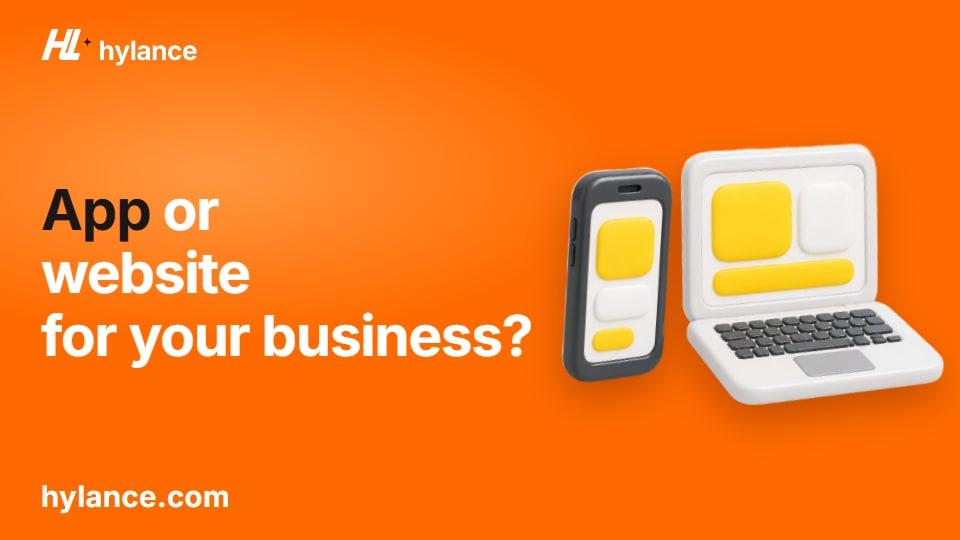
App or Website for Your Business?
Not every business needs an app. Use these questions and a simple comparison table to choose between a website, app, or ready-made store.
Key takeaways
- In most cases, start with a website or online store: customers can open it from a link without downloading anything, and it costs less to build and maintain.
- An app is worth it when the same customer comes back often, or when you need phone features like notifications, the camera, and location.
- App costs do not end at delivery: you still have updates, app store fees, and ongoing maintenance.
- A first version (MVP) lets you test the idea with the fewest possible features before you expand.
Start with a website or online store unless you have a clear reason to build an app. A customer can open a website from an ad or search result without downloading anything, it is faster to launch, and it needs less maintenance. An app is worth the cost in two cases: when the same customer comes back to you many times a month, or when the service cannot work well without phone features like notifications, the camera, and location. The rest of this guide will help you decide with a few practical questions, a comparison table, and a checklist of what to prepare before hiring a developer.
Five questions that make the decision clear
- How often does one customer use your business? Someone who buys once every few months is unlikely to keep your app on their phone.
- Where do your customers come from? Someone coming from an ad or search wants a page that opens right away, not a download page.
- Do you need phone features? Notifications, camera, location tracking, or offline use.
- Have you already proved the idea can sell? If not, test it in the cheapest way first.
- Do you have a budget for maintenance after delivery, not just for the initial build?
If your answers are “not often, from ads, no, not yet, no,” then a website or online store is your best option for now.
Table: website, ready-made store, app
These prices are approximate ranges based on services published on Hylance at the time of writing, and they vary depending on the number of pages and features. The exact price is listed on each service page.
| Option | Best for | Launch time | After delivery | Approximate price |
|---|---|---|---|---|
| Business website | Service company, clinic, office | Shortest | Hosting, domain, and light updates | SAR 300 to 750 (about $80 to $200) |
| Store on a ready-made platform | Selling products without a technical team | Short | Monthly platform subscription | From about SAR 265 (about $71) for setup |
| Custom-coded online store | A store that needs features platforms do not offer | Medium | Hosting and maintenance | SAR 900 to 2,200 (about $240 to $587) |
| Mobile app (first version) | Frequent use or phone features | Longest | Updates, app store fees, and maintenance | From about SAR 1,500 (about $400) |
When does an app really become necessary?
- A service people order often: delivery, repeat bookings, subscriptions.
- A loyalty program or wallet the customer comes back to.
- A service that depends on location, the camera, or instant notifications.
- Existing customers are actually asking for the app, and your website numbers prove they return.
Notice that the last case assumes you already have a working website and returning customers. That is why an app is usually a second step, not the first.
Costs business owners often forget
- Developer accounts for the app stores and their fees: check the official Apple and Google pages.
- Updating the app with each new mobile operating system release.
- The server and admin dashboard you use to manage content and orders.
- Marketing to get people to download the app, which is different from marketing to get purchases.
- A privacy policy and terms of use, which the app stores require before publishing.
- User support and replying to app ratings in the store.
- The app description and screenshots for its store page.
If you decide on an app, start with a first version
The first version, often called an MVP, includes the minimum number of features needed for a real customer to use it. Make a list of everything you want, then remove everything that can wait. In many cases, you will end up with just three or four screens. Also ask the developer whether they will build it with a cross-platform technology such as Flutter or build each system separately. The first option is often cheaper at the beginning.
What to prepare before you hire a developer
- A one-paragraph description of what the user does from the first screen to the final step.
- A list of screens or pages, even if it is just a hand-drawn sketch.
- Examples of websites or apps similar to what you want.
- Payment methods, shipping, and required languages.
- Who will manage the content after delivery, and what they need to be able to change themselves.
- What you expect to receive: the source code, publishing accounts in your name, and usage instructions.
Put all of that in your request message, because it becomes your shared reference at delivery. On Hylance, your payment stays on hold until you receive the work and confirm that it matches what you agreed on.
Two examples that make the decision clearer
A new perfume store selling through Instagram ads: its customer buys once every few months and comes from an ad, so there is no strong reason to ask them to download an app. A store on a ready-made platform is enough, and the money that would have gone into an app can go into photography and advertising instead.
A laundry service that picks up from home and delivers back: the customer orders every week, wants a notification when the driver arrives, and wants their address saved. Here, an app genuinely supports the way the service is used. Even so, the business can still start with a simple booking page on a website to confirm demand first, then build the app once repeat customers are there.
Website and app services on Hylance

Company Profile Website That Builds Trust Before First Contact
- Programming & Tech
- New service


Online store setup with local payment and shipping methods
- Programming & Tech
- New service

Flutter app for Android and iOS MVP
- Programming & Tech
- New service

Frequently asked questions
Does my business need a mobile app or is a website enough?
In most cases, a website or online store is enough, especially at the beginning. An app is worth it when the same customer uses your service many times, or when you need phone features like notifications, the camera, and location.
Which is cheaper: a website or an app?
A website is usually cheaper to build and maintain. An app is built for two systems, goes through app store review, and needs updates with each new mobile operating system release.
What does MVP mean for an app?
It is a first version with the minimum number of features needed for a real customer to use it and pay. The goal is to test the idea at a limited cost before spending on a full version.
Ready to put this into practice?
Browse Programming & Tech services on Hylance and order what your business needs, with escrow that protects both sides. Or create an account and list your first service in minutes.